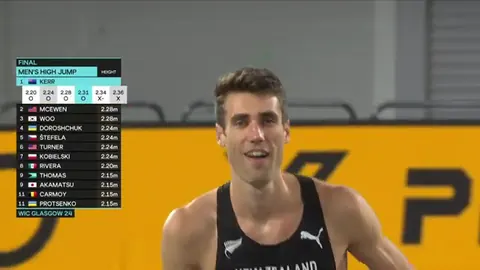


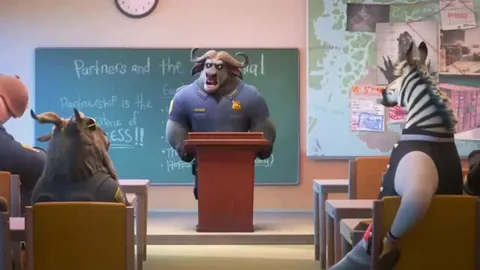
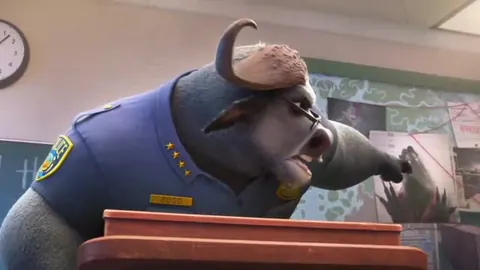







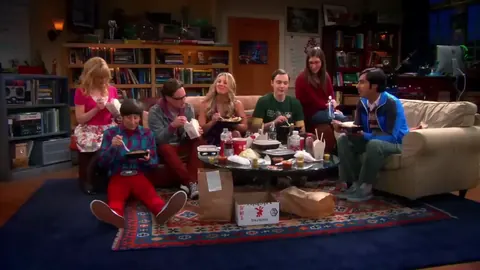








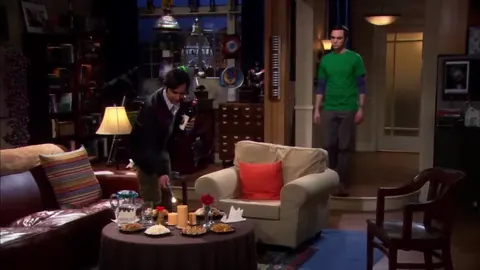



VideoMemBench

How Well Do MLLMs Remember
in Video Conversations?

Explore the benchmark
Zhengdong Hu1,*Chao Wang1,*Kaituo Feng2Huanjin Yao3Mingfei Lu1Hehe Fan4Yi Yang4,†
1 University of Technology Sydney2 The Chinese University of Hong Kong3 The Hong Kong University of Science and Technology4 Zhejiang University

* Equal contribution   ·   † Corresponding author

01 / THE BENCHMARK

Beyond answering one question at a time.

A useful video conversation is connected: later questions revisit what happened earlier, or build on an answer already given. VideoMemBench measures this ability to retrieve and reuse information across turns—in-context video memory.

01 / EPISODIC DEPENDENCY

Remember what you have seen.

A later question can return to a scene, object, or event discussed earlier in the conversation.

The model must reconnect that reference with the right visual episode and retrieve the relevant details.

EpiDepAccAccuracy on turns that revisit an earlier visual episode.
Episodic dependency: an earlier video scene is revisited by a later conversation turn.
An earlier visual episode anchors a later question.

02 / ANSWER DEPENDENCY

Remember what you have said.

A later question can build on an answer the model has already given.

That earlier answer becomes part of the reasoning. A correct response earns credit only when its full answer-dependency chain is also correct.

AnsDepAccCredit for a correct response and its answer ancestors.
Answer dependency: earlier model answers carry forward through a chain of later conversation turns.
Earlier answers carry forward through the conversation.

A video conversation, turn by turn.

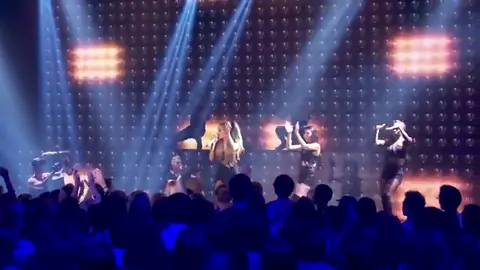
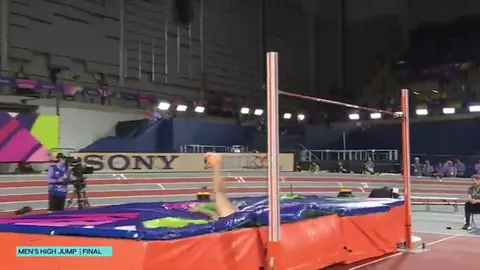
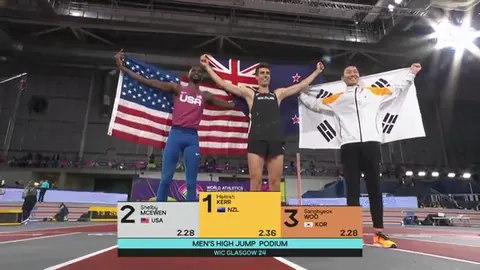
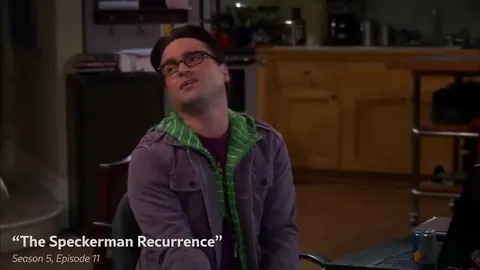
Follow a conversation across sports and product launches. Each question can return to an earlier scene or build on an earlier answer.

Loading video…
UCF vs. Arizona00:00

The video plays once. Questions follow their evidence timestamps. Select a turn to pause and revisit, or pause to read.

Questions & answers
  1. Loading questions…

02 / MAIN RESULTS

A substantial memory gap remains.

25 models evaluated with 128 frames and their own conversation history.

Main results from Table 2. Scores are percentages; higher is better.
RankModelAll turnsEpisodic dependencyAnswer dependencyMean score
1Claude Opus 5Closed-source52.349.135.745.7
2Gemini 3.8 FlashClosed-source50.446.630.342.4
3Kimi K3Open-weight50.549.027.142.2
4GPT-5.6-solClosed-source50.047.827.141.7
5Gemini 3.5 FlashClosed-source49.645.529.741.6
6GPT-5.5Closed-source48.046.527.040.5
7Claude Sonnet 5Closed-source47.845.327.340.2
8Gemini 3.1 Pro PreviewClosed-source45.744.827.039.1
9GPT-5.4Closed-source44.442.621.936.3
10Qwen3-VL-235B-A22BOpen-weight43.141.618.634.4
11Qwen3.5-27BOpen-weight42.239.820.934.3
12Qwen3.5-397B-A17BOpen-weight42.340.120.334.2
13Qwen3.5-122B-A10BOpen-weight42.439.519.933.9
14Qwen3.5-35B-A3BOpen-weight38.236.318.030.8
15Qwen3-VL-32BOpen-weight39.335.917.230.8
16Qwen3-VL-30B-A3BOpen-weight36.435.115.829.1
17Qwen3.5-9BOpen-weight34.633.412.927.0
18Qwen3-VL-8BOpen-weight34.832.112.326.4
19Qwen3.5-4BOpen-weight33.832.612.526.3
20Qwen3-VL-4BOpen-weight32.429.412.924.9
21Qwen2.5-VL-32BOpen-weight31.732.69.624.6
22Qwen2.5-VL-7BOpen-weight26.224.98.419.8
23Keye-VL-1.5-8BOpen-weight25.424.58.219.4
24Qwen2.5-VL-3BOpen-weight23.524.45.717.9
25Qwen3.5-0.8BOpen-weight21.621.35.716.2
25 modelsWe will continue evaluating new models and updating this leaderboard.

Main results from Table 2 of the manuscript. All model scores use 128 fixed frames and sequential self-rollout. Scores are percentages.

Evaluation with fewer frames

13 open-weight models evaluated with 64 or 32 fixed frames per video.

64 frames

Table 4: 64 fixed frames and sequential self-rollout. Scores are percentages; higher is better. Rank is by Overall score.
RankModel TurnAccAll turns EpiDepAccEpisodic dependency AnsDepAccAnswer dependency OverallMean score
1Qwen3-VL-235B-A22B40.339.315.631.7
2Qwen3.5-122B-A10B37.836.515.229.8
3Qwen3.5-27B37.936.714.829.8
4Qwen3-VL-32B37.836.114.529.5
5Qwen3.5-35B-A3B37.036.713.529.1
6Qwen3-VL-30B-A3B33.632.911.526.0
7Qwen3-VL-8B32.732.011.925.5
8Qwen3.5-9B33.433.29.625.4
9Qwen3-VL-4B31.330.312.124.5
10Keye-VL-1.5-8B24.524.96.318.5
11Qwen2.5-VL-7B24.122.76.417.7
12Qwen2.5-VL-3B22.522.55.116.7
13Qwen3.5-0.8B21.021.14.715.6

32 frames

Table 4: 32 fixed frames and sequential self-rollout. Scores are percentages; higher is better. Rank is by Overall score.
RankModel TurnAccAll turns EpiDepAccEpisodic dependency AnsDepAccAnswer dependency OverallMean score
1Qwen3-VL-235B-A22B36.337.814.529.5
2Qwen3.5-122B-A10B35.035.210.727.0
3Qwen3.5-35B-A3B34.534.112.327.0
4Qwen3.5-27B34.934.211.726.9
5Qwen3-VL-32B34.132.613.126.6
6Qwen3-VL-30B-A3B32.132.58.024.2
7Qwen3.5-9B29.830.48.622.9
8Qwen3-VL-8B29.429.49.222.7
9Qwen3-VL-4B29.029.08.822.3
10Qwen2.5-VL-7B23.223.74.917.3
11Keye-VL-1.5-8B23.323.15.117.2
12Qwen2.5-VL-3B22.623.44.716.9
13Qwen3.5-0.8B20.121.84.715.5

Table 4 · Fixed frames and sequential self-rollout. Scores are percentages.

03 / EVALUATION

The same video. The model’s own history.

Visual input stays fixed; the conversation unfolds one turn at a time.

Evaluation protocolFixed input, sequential conversation, answer grading
Evaluation pipeline: fixed visual input, sequential self-rollout, answer grading, dependency-aware metrics
  1. Fix the visual input

    Uniformly sample 128 timestamped frames once per video. Reuse the same frames for every model and every turn.

  2. Roll out the dialogue

    Ask questions in order, retaining the model’s own full historical responses. Ground-truth answers are not inserted into history.

  3. Grade each response

    Extract option letters for multiple-choice questions. Grade open-ended answers with GPT-5.4 mini under the paper’s binary semantic criterion.

TurnAccTurn accuracy
Evaluation subset
All conversation turns.
Credit rule
A turn receives credit when the current response is correct.
EpiDepAccEpisodic dependency accuracy
Evaluation subset
Turns with at least one Episodic parent.
Credit rule
The current response must be correct. Credit is independent of whether the parent responses were correct.
AnsDepAccAnswer dependency accuracy
Evaluation subset
Turns with at least one Answer parent.
Credit rule
The current response and every recursive ancestor reached through Answer edges only must all be correct. Episodic edges are not followed when tracing these ancestors.
OverallEqual-weight mean of the three metrics

(TurnAcc + EpiDepAcc + AnsDepAcc) / 3

The three metrics contribute equally to the overall score. All scores are reported as percentages; higher is better.

04 / CITATION

Cite VideoMemBench

BibTeX
@misc{videomembench,
      title={VideoMemBench: How Well Do MLLMs Remember in Video Conversations?}, 
      author={Zhengdong Hu and Chao Wang and Kaituo Feng and Huanjin Yao and Mingfei Lu and Hehe Fan and Yi Yang},
      year={2026},
      eprint={2610.40131},
      archivePrefix={arXiv},
      url={https://arxiv.org/abs/2610.40131}
}
